
For all the sophistication surrounding FemTech, one of its most familiar promises remains modest: tell an app when your last period started, and it will estimate the next one.
Useful, certainly. Knowing one’s cycle and its variations is important and provides an abstract indication of when to visit an OB-GYN for a check-up. Additional data on bodily conditions help too – fatigue, headaches, mood swings, flow frequency, viscosity, spotting, etc. Applications like Flo and Clue work wonderfully in collecting this information and putting it together.
Despite this, it comeswith its own set of challenges, principal among which are:
- Inaccurate cycle predictions: Apps frequently produce inaccurate period and fertility predictions, which can cause frustration, anxiety, a false sense of confidence, or lead users to blame their own bodies rather than faulty algorithms.
- Alarmist notifications and overmedicalisation: Apps often overpathologise minor, normal cycle variations by sending persistent notifications suggesting the user has an underlying medical condition (such as PCOS) or may be pregnant, inducing unwarranted health anxiety and diagnostic stress.
Beyond these challenges, there are localization issues as well:
- Data bias and the 'WEIRD' default: Many mainstream algorithms are trained on datasets drawn predominantly from western, educated, industrialised, rich, and democratic (WEIRD) populations, making them less accurate for women of diverse ethnicities or those in developing region.
- Cultural and linguistic blind spots: Apps often fail to account for regional languages, local health literacy levels, or cultural taboos, resulting in tone-deaf notifications.
- Disconnected from local healthcare ecosystems: An app might flag a potential issue, but it rarely integrates with regional healthcare infrastructure, leaving users without a clear, actionable next step.
How do we move from mere tracking to transformative care?
If the 1st generation of FemTech was about data collection, the next generation must be about contextual intelligence. The first wave of digital menstrual health simply translated familiar tools onto screens – calendars became trackers, and printed guidance became searchable libraries. The next phase is defined less by digitization and more by responsiveness.
Here is the additionalvalue AI can bring to menstrual health:
Proactive pattern recognition (Orientation, not diagnosis)
Information aboutrecurring fatigue, headaches, or mood changes may not seem connected until they recur at the exact same point each month. Period trackers are good at recording dates, but understanding menstrual health requires connecting symptoms across multiple cycles. Was the pain this severe last month? Did the headaches begin before or after the period?
AI excels at answering these longitudinal questions. The stakes for getting this right are incredibly high:
The WHO estimates that PCOS affects 10–13% of reproductive-age women worldwide, yet up to 70%of those affected remain unaware of the condition.
An irregular cycle alone proves very little; a persistent pattern accompanied by other changes carries different information. Instead of triggering alarmist pop-ups, a well-designed AI can provide orientation: a clearer picture of what has changed and what keeps recurring. It should help people recognize questions worth taking to a professional, not diagnose them.
Shortening the distance between uncertainty and action
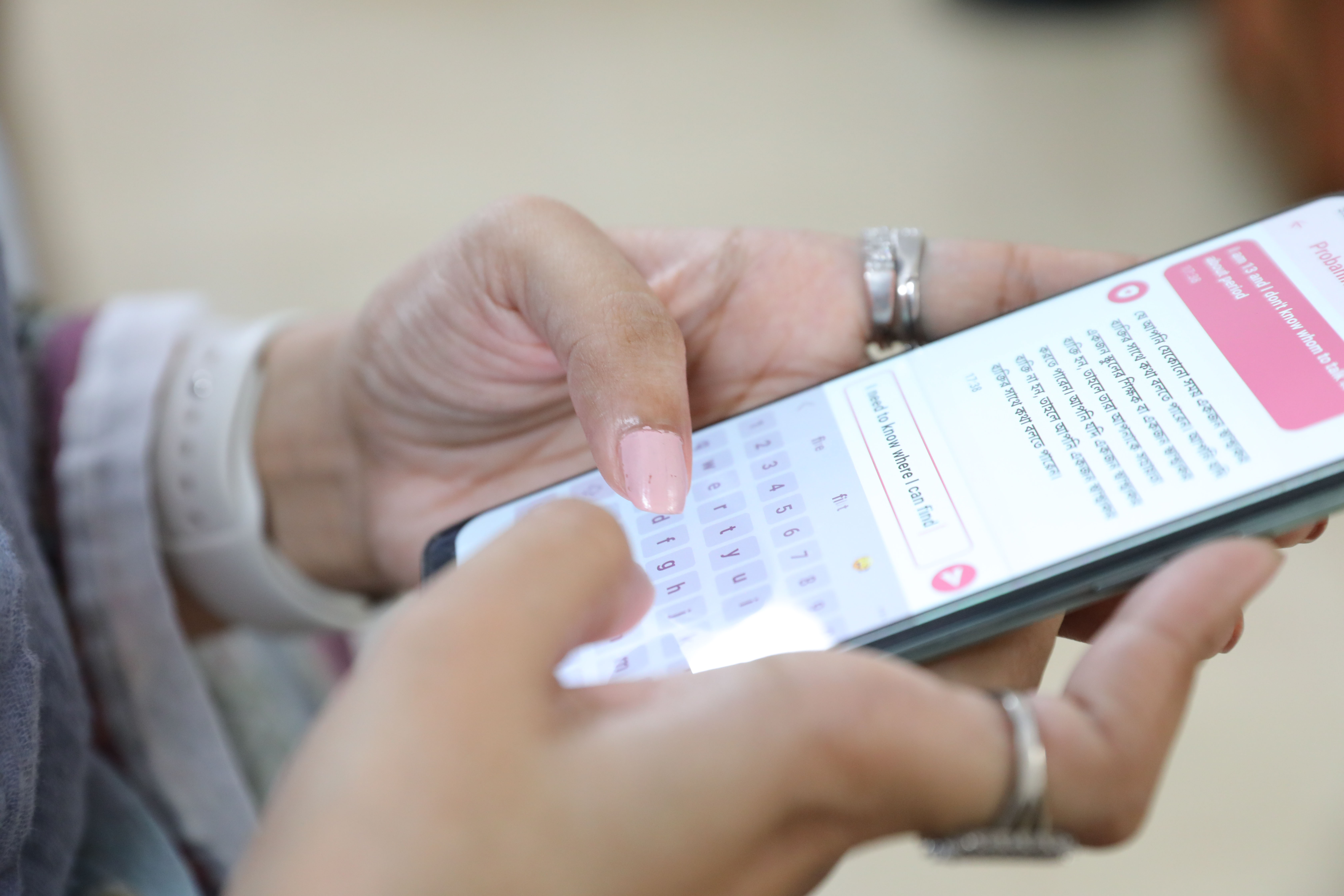
Next-generation AI can act as an empathetic, conversational partner. By accommodating everyday language and carrying context from one interaction to the next, AI helps a user navigate an unfamiliar concern without forcing her to become her own search analyst. It shortens the distance between the uneasy feeling that 'something is different' and knowing exactly what to do next.
As one of our routine survey respondent perfectly captured the need for this shift (from a survey sample relevant to our Probahini Bot UX study):
"Sometimes I know that something feels different, but I don't know whether it is normal. Being able to describe the symptoms and ask follow-up questions helps me understand what I should pay attention to."
Unlocking 'Needs Intelligence' through open-ended conversations
An individual conversation helps one person make sense of a concern; thousands of conversations can reveal recurring information gaps across a community.
Through open-ended AI interactions, users ask things like:
"Why is my period sometimes late even when it usually comes regularly?
"Is this amount of pain normal? And why do I feel so different before my period?"
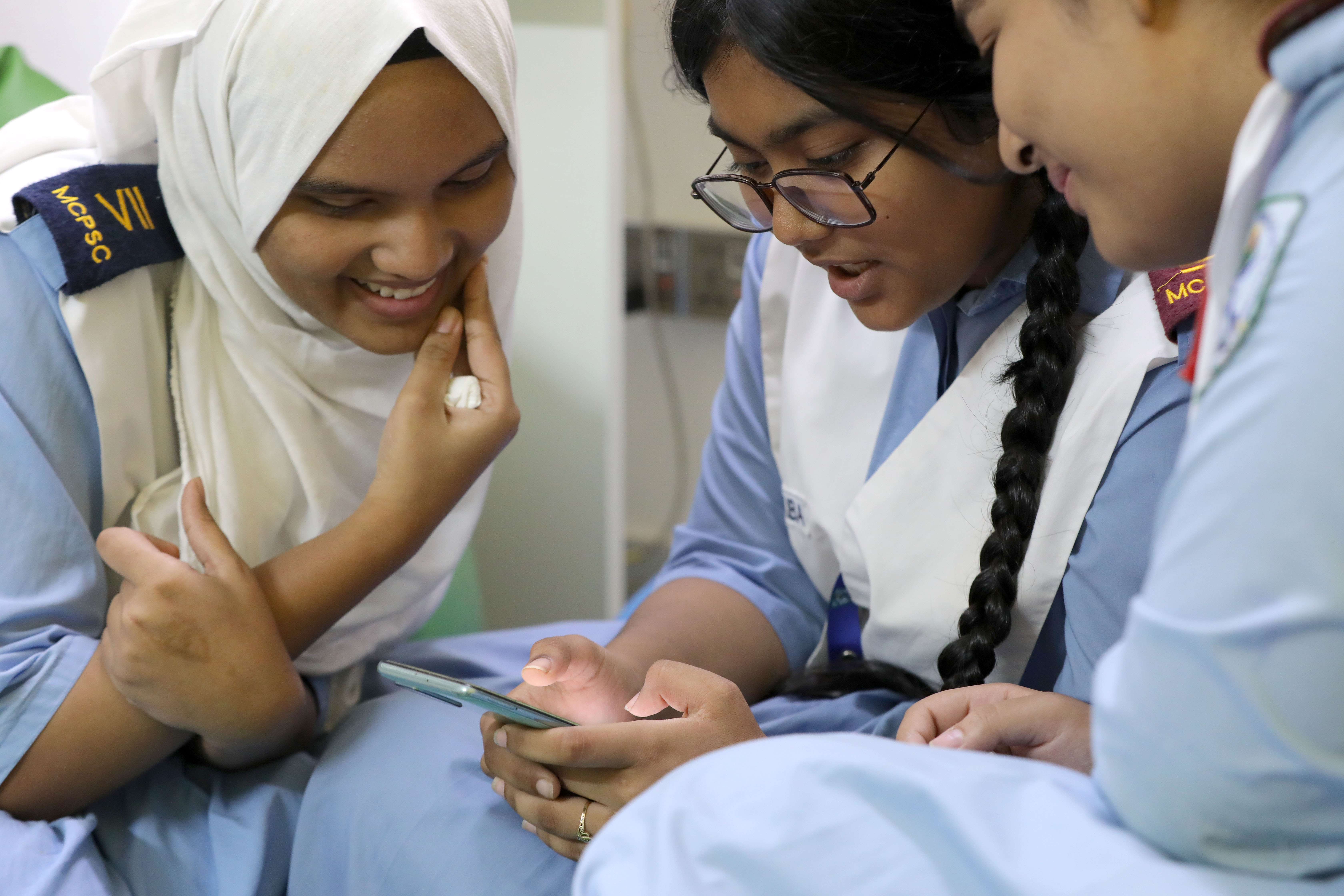
With appropriate consent and privacy protection, these interactions generate needs intelligence. We see the potential of this at scale through the Probahini Chatbot - Acme AI's flagship menstrual health advisory bot - rolled out via WaterAid, MHM Platform, and BRAC which currently flaunts over 40,000 users in the grassroots Bangladesh. Delivering conversational AI at that scale makes recurring, localised information needs visible in ways traditional, top-down health education simply cannot.
2nd Generation: Probahini and the agentic horizon
If Probahini’s first step was listening to the community at scale, its second generation is about agentic amplification – moving from passive tracking to active, intelligent intervention. This is where AI transitions from a tool you use, to a partner that works for you.
- From push notifications to conversational agents: Instead of a static, alarmist push notification saying, "Your period is in 2 days," an agentic AI initiates a two-way, context-aware dialogue: "I notice your flow has been heavier this cycle and you logged fatigue yesterday. Are you experiencing dizziness? Would you like me to remind you to take your iron supplements and reorder your pads?" The AI acts on the user's behalf, turning data into daily care.
- Auditory inputs and outputs (Voice-first accessibility): Typing out sensitive symptoms on a screen isn't always possible, private, or accessible – especially for users with lower literacy levels or those sharing devices with family members. By integrating auditory inputs and outputs, users can simply speak their symptoms in their local dialect and listen to AI-generated audio advice. This radically lowers the barrier to entry and ensures privacy.
- Adding the menopause context: 'FemTech' shouldn't stop at reproductive years. A 2nd generation platform uses longitudinal data to seamlessly transition a user’s profile as she ages. The AI can differentiate between a late period caused by stress versus the onset of perimenopause, tracking hot flashes, sleep disruptions, and mood shifts. It extends the lifecycle of care, ensuring women aren't left in the dark during the menopausal transition.
The goal of agentic amplification is to shift the user experience from 'tracking my data' to 'managing my health', meeting the user exactly where she is in her biological lifecycle.
Bridging the gap between patient and clinician
A 15-minute OB-GYN appointment is rarely enough to convey months of complex cycle history. AI can act as a medical scribe and translator. By analyzing a user’s logged data and conversational history, AI can generate a concise, clinician-friendly summary report ahead of a visit. This transforms raw, overwhelming data into actionable clinical insights, making healthcare interactions vastly more productive.
Grounding technology in real-world ecosystems
None of this technological optimism should diminish the fundamentals. Safe water and sanitation facilities, affordable menstrual products, comprehensive menstrual literacy, healthcare access, and social change remain central. Technology operates within that ecosystem, not above it.
Its true contribution becomes most interesting in the space between having information and knowing what to do with it. By breaking down the silos between reproductive health, mental well-being, and local community needs, AI can provide a 360-degree view of health that is both deeply personal and broadly impactful.
Bottom line
It’s time for FemTech to stop just asking, 'When is your next period?' and start answering, 'How can we support your whole health, today?'
The ultimate benchmark for menstrual-health technology is no longer just another marginal improvement in period prediction. It is this:
Can a user arrive with the uneasy feeling that 'something is different' and leave with a clearer sense of what she is experiencing, what deserves attention, and where to go next?
For menstrual-health technology, that is where the next chapter begins.