
For decades, Dhaka's roads were a spectacle of engineered disorder. Red lights ignored. Pedestrian crossings invaded. Lanes treated as suggestions. Could anything actually change this?
Apparently, yes.
Since the Dhaka Metropolitan Police deployed its AI-based Road Transport Act Violation Detection System across 120 smart cameras – at Shahbagh, Karwan Bazar, Bijoy Sarani, and beyond – the streets look measurably different. Motorcycles stop behind zebra crossings, autorickshaws give way to let other vehicles or pedestrians go first, rather than pushing through as they historically would. Over 300 violations were filed in the first week alone. For a city that has tried and failed with manual policing for generations, this is nothing short of a miracle.

Yes, there are rough edges. Social media carries complaints from vehicle owners allegedly receiving notices they claim are erroneous – largely because blurred or non-standard number plates confound the plate-recognition algorithm. A phishing scam mimicking official fine notices has added noise. The human verification layer in the system before cases are formally filed are being done partially by the Technical Traffic Unit of the DMP – indicating that there is a possibility of algorithm-fueled misidentification. These are teething problems, not structural failures – something that can be solved through technical fine-tuning of the AI models.
The more important question is: what comes beyond basic road traffic violations?
Beyond the Basics
The current system catches red-light jumping, entering closed left lanes, lane violations, wrong-way driving, and illegal parking. That is a narrow starting point. Countries that have gone furthest with AI traffic infrastructure, such as the US, UK, UAE, Singapore, and China, are the ones that expanded scope early – and reaped the civic goodwill that followed.
Accident and incident detection is the most compelling next step. Dubai Police's AI camera network already identifies collisions in real time, flags vehicles stopped in live lanes, and alerts emergency services within seconds – with human reviewers confirming before any enforcement action. While the technology already exist in modular AI dashcams – which are routinely used to establish accident liability claims. In the UK, 62%of dashcam-owning drivers involved in accidents used their footage in a claim, with 32% AI analysis providing timestamps, speed data, and impact angles to establish fault and to distinguish aggressors from the aggrieved - effectively removing the ‘he-said-she-said’ dynamic that plagues Dhaka's accident disputes today. The science has advanced further still: Artificial Intelligence Traffic Police (CVPR 2026), a multimodal AI model from Shanghai Jiao Tong University, specifically designed to allocate legal responsibility in crashes using video and traffic regulation knowledge – distinguishing aggressors from the aggrieved and removing the ‘he-said-she-said’ dynamic that plagues Dhaka’s accident disputes today.
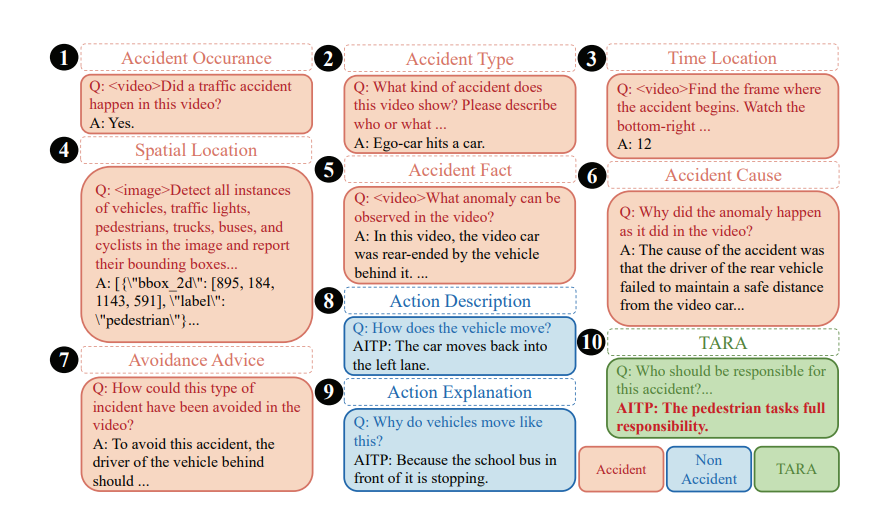
NYU Tandon’s SeeUnsafe system, winner of New York City’s Vision Zero Award, applies the same multimodal LLM approach to existing city camera feeds – detecting collisions and near-misses with 76.71% accuracy using infrastructure cities already have. Dhaka’s camera network could support exactly that.
Jaywalking detection, deployed in Shenzhen, photographs offenders at intersections and displays them on public LED screens – since rollout, authorities identified nearly 14,000 jaywalkers at a single intersection alone. A version calibrated for Dhaka – focused on deterrence, not shaming – could make crossings meaningfully safer. And footpath obstruction detection, an extension of the same camera infrastructure, would directly address one of the city's most dangerous daily realities: pedestrians forced into traffic because the pavement is blocked.
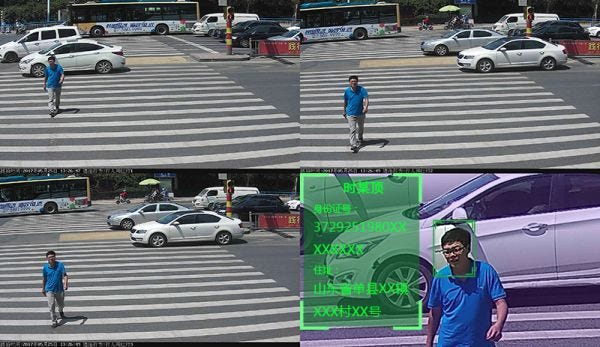
Each of these expansions builds something more valuable than compliance. They build trust. And trust, in a city historically skeptical of enforcement, is the real prize.
One Barrier Left
Is any of this speculative? Not at all. Accident detection is live in Dubai. Parking AI runs at scale in Singapore. Jaywalking systems are embedded in Shenzhen. Singapore's adaptive traffic signals have cut intersection delays by 22%. The technology exists. The deployments are proven.
What Dhaka needs now is a robust dataset to train the AI traffic model. AI traffic models are only as accurate as the data they learn from. A neighbouring South Asian city - Bengaluru - has already shown how. BMD-45, a dataset built by the Indian Institute of Science from 3,600 operational CCTV cameras in Bengaluru, covers 14 vehicle categories including auto-rickshaws and the kind of dense, heterogeneous traffic Dhaka drivers know well.
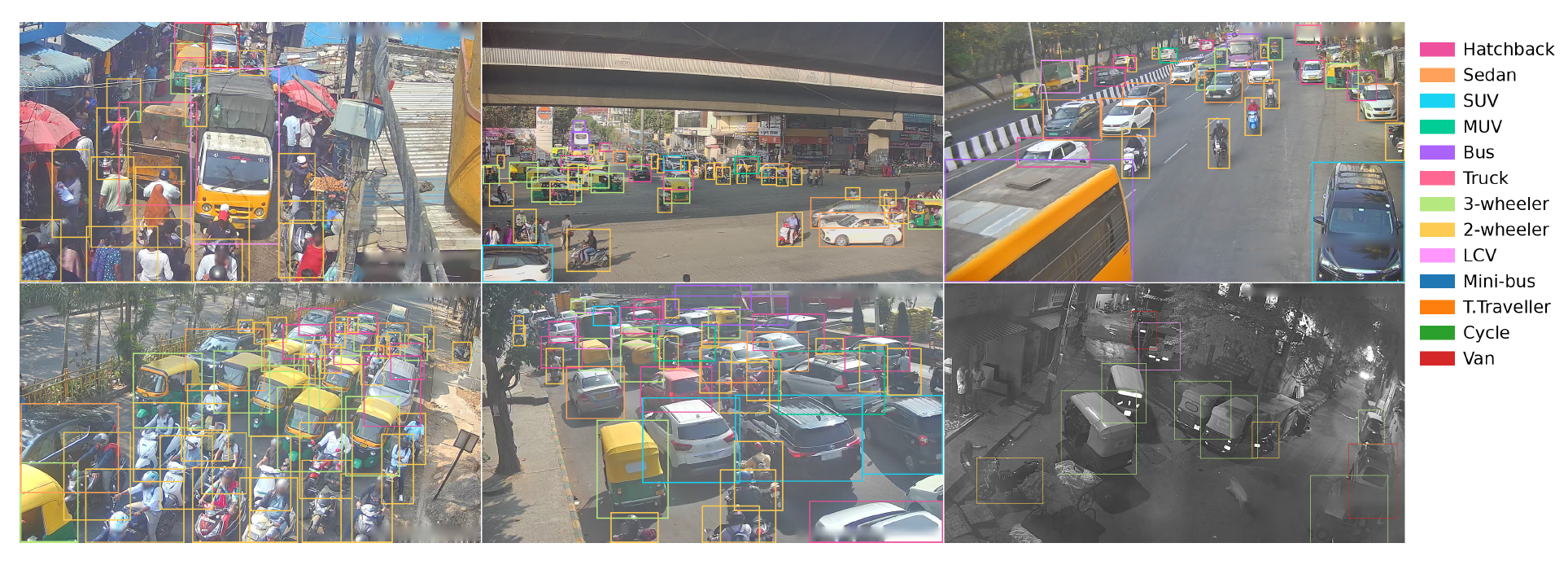
It is the closest analogue to what Bangladesh needs – and a clear blueprint for what to build. Dhaka's diverse road conditions, vehicle types, signage conventions, and violation patterns are distinct enough to demand a purpose-built model, not an imported one. Bangladeshi AI fine-tuning outfits – experienced in building training datasets for computer vision models across domains like autonomous vehicles, fleet management, and human-in-the-loop evaluations – are the kind of stakeholders the police needs to partner with for this effort needs to move fast. That investment in data collection, annotation, and iterative training is the only remaining barrier between Dhaka and a world-class smart traffic system.
Given what has been achieved in just weeks, that barrier looks very surmountable.